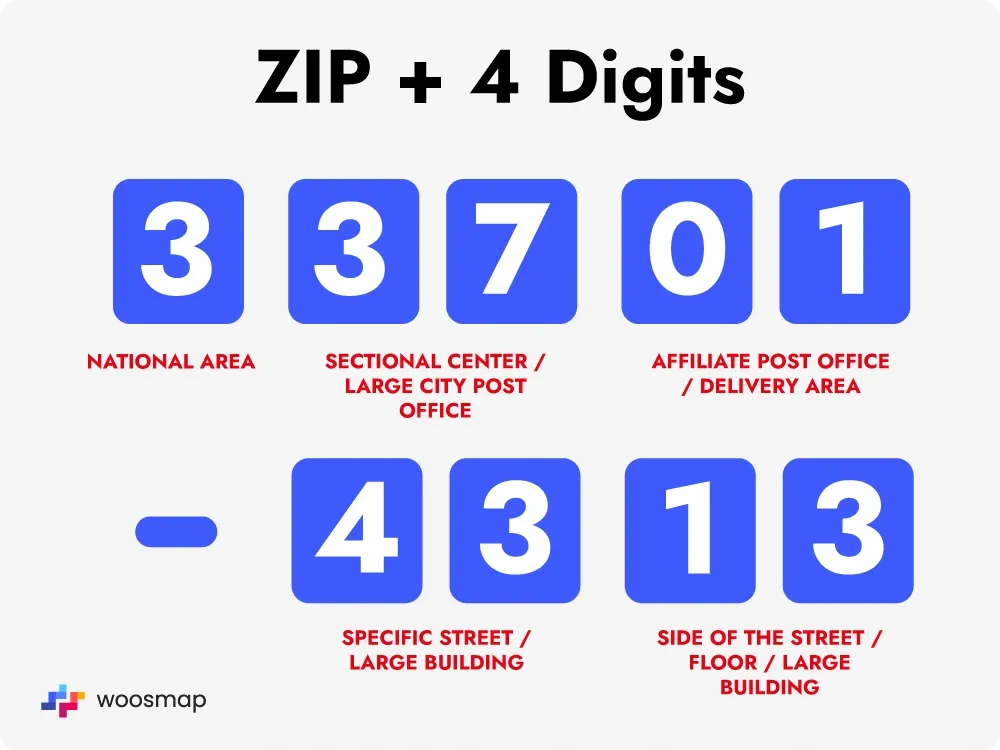
In the world of mail and package delivery, the terms "ZIP Code" and "Postal Code" are often used interchangeably. However, while they serve similar purposes, they are not exactly the same. Understanding the differences between these two can help clarify how mail systems work globally and in specific countries like the United States.
This article explores the definitions, purposes, formats, and geographical usage of ZIP Codes and Postal Codes, highlighting their unique roles in the postal ecosystem.
What Is a ZIP Code?
Definition
A ZIP Code (Zone Improvement Plan Code) is a numerical system used by the United States Postal Service (USPS) to efficiently sort and deliver mail within the United States. Introduced in 1963, the ZIP Code system was designed to streamline mail delivery by dividing the country into specific geographic zones.
Purpose
- Improves mail sorting and delivery speed
- Reduces errors in mail routing
- Facilitates automated mail processing
Format
- Basic ZIP Code: 5 digits (e.g., 10001 for New York, NY)
- ZIP+4 Code: 9 digits (e.g., 10001-1234), providing more precise delivery locations such as a specific building or floor
Usage
- Exclusively used in the United States and its territories (e.g., Puerto Rico, Guam)
- Not used internationally
What Is a Postal Code?
Definition
A Postal Code is a series of letters, digits, or both, assigned to specific geographic areas to facilitate the sorting and delivery of mail. Unlike the ZIP Code, which is specific to the U.S., Postal Codes are used worldwide and vary in format from country to country.
Purpose
- Standardizes mail delivery globally
- Ensures accurate and efficient routing
- Adapts to local addressing systems
Format
Postal Codes differ by country. Here are a few examples:
| Country | Postal Code Format | Example |
|---|---|---|
| United Kingdom | Alphanumeric | SW1A 1AA |
| Canada | Alphanumeric | K1A 0B1 |
| Germany | 5 digits | 10115 |
| France | 5 digits | 75000 |
| Japan | 3 digits + 4 digits | 100-0001 |
| Australia | 4 digits | 2000 |
Usage
- Used in almost every country globally
- Each country has its own system and format
Key Differences Between ZIP Code and Postal Code
1. Geographical Scope
- ZIP Code: Only used in the United States and its territories.
- Postal Code: Used internationally, with each country having its own system.
2. Format
- ZIP Code: Numerical only (5 or 9 digits).
- Postal Code: Varies by country—can include letters, numbers, or a combination of both.
3. Purpose and Function
- ZIP Code: Designed for domestic mail efficiency within the U.S.
- Postal Code: Designed for global mail standardization, adapting to each country’s needs.
4. Introduction and History
- ZIP Code: Introduced in 1963 by the USPS.
- Postal Code: Introduced at different times in different countries (e.g., UK in 1959, Canada in 1971).
5. Precision
- ZIP+4 Code: Provides more precise delivery (e.g., to a specific building).
- Postal Codes: Precision varies; some countries use detailed alphanumeric codes (e.g., UK’s SW1A 1AA for Buckingham Palace).
Why Does the Difference Matter?
Understanding the distinction between ZIP Codes and Postal Codes is important for several reasons:
- Accurate Mail Delivery: Using the correct format ensures your mail reaches its destination without delays.
- International Shipping: When sending mail abroad, using the recipient country’s Postal Code is crucial.
- E-commerce and Logistics: Businesses and online retailers rely on accurate Postal/ZIP Codes for shipping and customer satisfaction.
- Data and Analytics: Postal Codes are often used in demographic studies, marketing, and location-based services.
Common Misconceptions
Misconception 1: "ZIP Code and Postal Code Are the Same"
- Reality: While both serve similar purposes, ZIP Codes are specific to the U.S., whereas Postal Codes are global.
Misconception 2: "All Postal Codes Are Numerical"
- Reality: Many countries use alphanumeric Postal Codes (e.g., Canada’s K1A 0B1).
Misconception 3: "ZIP Codes Are Used Everywhere"
- Reality: Only the U.S. and its territories use ZIP Codes. Other countries have their own systems.
Real-World Examples
Example 1: Sending Mail Within the U.S.
- Address:
John Doe 123 Main St New York, NY 10001- 10001 is the ZIP Code for New York, NY.
Example 2: Sending Mail to the UK
- Address:
Jane Smith 10 Downing St London SW1A 2AA United Kingdom- SW1A 2AA is the Postal Code for a specific area in London.
Example 3: Sending Mail to Canada
- Address:
Maple Leaf Inc. 123 Maple Ave Ottawa, ON K1A 0B1 Canada- K1A 0B1 is the Postal Code for Ottawa.
How to Find a ZIP or Postal Code
Finding a ZIP Code (U.S.)
- USPS Website: Use the USPS ZIP Code Lookup tool.
- Google Maps: Search for an address, and the ZIP Code is often displayed.
Finding a Postal Code (International)
- National Postal Service Websites: Most countries have an official postal service website with a lookup tool.
- UK: Royal Mail Postcode Finder
- Canada: Canada Post Postal Code Lookup
- Germany: Deutsche Post PLZ-Suche
- Online Directories: Websites like PostalCodes.net provide Postal Codes for many countries.
The Evolution of Postal Systems
From Manual Sorting to Automation
- Pre-20th Century: Mail was sorted manually, leading to delays and errors.
- 20th Century: Introduction of ZIP Codes (1963) and Postal Codes in other countries revolutionized mail sorting.
- 21st Century: Automated systems use Postal/ZIP Codes for faster, more accurate delivery.
The Role of Technology
- Optical Character Recognition (OCR): Scans addresses and extracts Postal/ZIP Codes for sorting.
- GPS and Mapping: Integrates Postal/ZIP Codes with digital maps for real-time tracking.
Fun Facts About ZIP and Postal Codes
- Longest Postal Code: The UK’s Postal Codes can be up to 7 characters long (e.g., SW1A 1AA).
- Shortest Postal Code: Brunei uses 2-digit Postal Codes (e.g., BA 1234).
- ZIP Code 12345: One of the most famous ZIP Codes in the U.S., assigned to Schenectady, NY.
- Postal Code for Santa Claus: Canada has a special Postal Code for letters to Santa: H0H 0H0.
Challenges and Limitations
Challenges with ZIP Codes
- Rural Areas: Some rural areas in the U.S. have the same ZIP Code for large regions, leading to less precision.
- Frequent Changes: ZIP Codes can change due to population growth or redistricting.
Challenges with Postal Codes
- Complex Systems: Some countries have complicated Postal Code systems (e.g., Japan’s 3+4 digit format).
- Lack of Standardization: Not all countries use Postal Codes, and some have inconsistent formats.
How Businesses Use ZIP and Postal Codes
E-commerce
- Shipping Calculations: Online stores use ZIP/Postal Codes to calculate shipping costs and delivery times.
- Fraud Prevention: Verifying ZIP/Postal Codes helps prevent fraudulent transactions.
Marketing
- Targeted Campaigns: Businesses use Postal Codes to segment customers by location.
- Local SEO: Including ZIP/Postal Codes in online listings improves local search rankings.
Logistics and Supply Chain
- Warehouse Location: Companies choose warehouse locations based on ZIP/Postal Code data to optimize delivery.
- Route Optimization: Delivery services use Postal Codes to plan efficient routes.
The Future of Postal Codes and ZIP Codes
Digital Transformation
- Smart Addressing: Integration with AI and machine learning for even faster sorting.
- Blockchain: Potential use of blockchain technology for secure, tamper-proof Postal Code systems.
Sustainability
- Eco-Friendly Delivery: Postal Codes help optimize delivery routes, reducing carbon emissions.
- Paperless Systems: Digital Postal Codes (e.g., QR codes) may replace traditional formats.
Conclusion
While ZIP Codes and Postal Codes both serve the fundamental purpose of ensuring mail reaches its destination, they are not interchangeable. ZIP Codes are unique to the United States, while Postal Codes are a global concept with varied formats and systems.
Understanding these differences is essential for accurate mail delivery, international shipping, and even business operations. Whether you're sending a letter to a friend across the country or shipping products to customers worldwide, using the correct code ensures your mail arrives quickly and efficiently.
FAQs
1. Can I use a ZIP Code instead of a Postal Code for international mail?
No. ZIP Codes only work within the U.S. For international mail, you must use the recipient country’s Postal Code.
2. Are all Postal Codes numerical?
No. Many countries use alphanumeric Postal Codes (e.g., UK, Canada).
3. How do I know if I’m using the right Postal Code?
Check the official postal service website of the country you’re sending mail to.
4. What happens if I use the wrong ZIP or Postal Code?
Your mail may be delayed, misrouted, or returned to the sender.
5. Do all countries use Postal Codes?
No. Some countries, especially those with small populations or simple addressing systems, do not use Postal Codes.
References
- United States Postal Service (USPS): www.usps.com
- Royal Mail (UK): www.royalmail.com
- Canada Post: www.canadapost.ca
- Universal Postal Union (UPU): www.upu.int
This is a really helpful guide! I always get confused with different ZIP codes when shipping packages. Thanks for explaining this so clearly.
Thanks Alice! Glad you found it useful. Feel free to check out our other guides as well.
Great write-up! Quick question: does this apply to PO Boxes as well, or is the layout different?