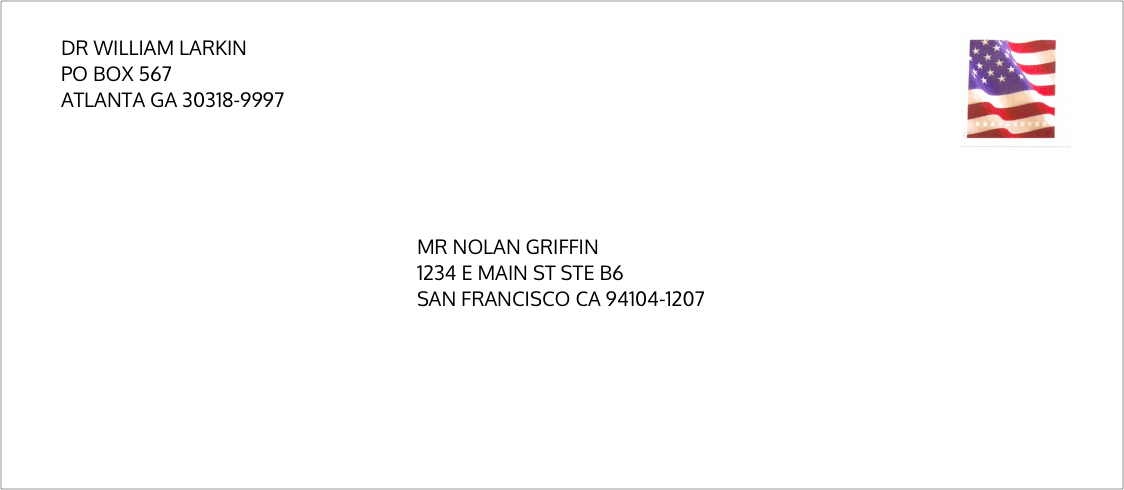
In the United States, a correctly formatted mailing address helps ensure that letters and packages arrive quickly and without delays. The U.S. Postal Service (USPS) and other carriers rely on a standardized structure: name, street address, city, state, and ZIP code, laid out in a clear block format. Below is a practical guide to writing a U.S. mailing address correctly, including key formatting tips and an example. pe.usps
Standard US address format
For mail sent within the United States, use this four‑line pattern: ups
-
Line 1 – Recipient name
Start with the full name of the person or organization, and add any applicable titles (for example, “Dr.” or “Rev.”) if you wish. icenter.tufts -
Line 2 – Street address (and optional unit)
Write the street number, predirectional (if any, such as “NW” or “SE”), street name, street‑type abbreviation (for example, “St.” or “Ave.”), and any apartment, suite, or unit number on the same line. lettrlabs -
Line 3 – City, state, and ZIP code
Write the full city name, followed by a space, the two‑letter state abbreviation (for example, “NY” for New York), and then the five‑digit ZIP code, all on one line and separated by single spaces. For extra precision, you can include the ZIP+4 format (for example, 12345‑6789) with a hyphen between the fifth and sixth digits. canadapost-postescanada -
Line 4 – Country (for international mail only)
If you are sending mail from outside the United States, add “USA” or “UNITED STATES” on its own final line so postal services can quickly identify the destination country. oreateai
Example of a correct US mailing address
Here is a typical correctly‑formatted U.S. residential address: smarty
John A. Smith
1234 Main Street Apt 2B
Chicago IL 60601
USA
In this example:
- Line 1: person’s full name.
- Line 2: street address plus apartment number.
- Line 3: city, state abbreviation, and ZIP code on one line.
- Line 4: “USA” is added because the article assumes this is mail sent from abroad. oreateai
Key formatting tips
- Use capital letters and left‑align the address on the envelope or label, with no punctuation inside the address lines (for example, “CHICAGO IL 60601” instead of “Chicago, IL, 60601”). wmich
- Include all necessary parts of the street address, such as apartment or suite numbers, and directionals (NW, SE, etc.), because missing details can cause delays or misrouting. pe.usps
- Keep the address on one side of the mailpiece, in a clear, simple font, and avoid busy backgrounds or patterns that can interfere with machine reading. postgrid
References
- USPS Postal Explorer – “Delivery Address” guidelines for block‑format addresses and machine‑readable best practices. pe.usps
- UPS “How to Write a Shipping Address” for domestic and international U.S. address formatting. ups
- USPS‑style and carrier‑aligned examples from address‑format resources such as Tufts International Center and global address‑format guides. canadapost-postescanada
- Style guides emphasizing USPS formatting (capital letters, no punctuation, ZIP+4 usage). loqate
No approved comments yet.